Slave-Free Alliance Anti-Slavery Week Resources
Thank you for your interest in using Anti-Slavery Week 2026 (12th to 18th October 2026) to raise awareness among your stakeholders about modern slavery. Find downloadable resources and graphics on this page.
These resources would also be useful for your organisation to share on other important dates linked to this issue, such as World Day Against Trafficking in Persons (30th July) or International Day for the Abolition of Slavery (2nd December).
Anti-Slavery Week this year runs from 12th-18th October 2026. It’s a great time to raise awareness of the issue in our own organisations, engage with our colleagues, customers, suppliers and partners about it and show what is being done to address modern slavery in our operations and supply chain
Social media – general posts
A really simple way to mark Anti-Slavery Week is to share about it on social media or on other communications channels. We have created some basic graphics for you below. Use the hashtags #AntiSlaveryWeek and #ASW2026


You can find suitable options for use on LinkedIn, Facebook, Instagram, in slide decks, on websites or in newsletters by downloading the whole set of social graphics at a variety of sizes in the below ZIP folder (7 MB):
Spot the Signs posters
These posters detail common signs of modern slavery, focusing on indicators of forced labour. The poster designs vary only by the imagery, the text content is the same in all cases.
The first link takes you to an editable template on Canva, suitable if you want to add in your organisation’s own contact details or helpline info, and your own logo (do not change any of the other text, colours or branding without seeking approval from Slave-Free Alliance first).
If you do not need to add your own helpline or contact details, nor need to add your own logo, instead use the finalised posters available in the zip folder, available at the second link.
Note on languages: Our parent charity Hope for Justice has many additional Spot the Signs poster designs in a variety of languages. Email info@slavefreealliance.org if you need multilingual resources and we will try to help.
Social media – facts to share
Share these attention-grabbing and thought-provoking facts about modern slavery and labour exploitation during Anti-Slavery Week to engage your audience, workforce, partners and customers. We have created 3 for you below, along with suggested captions to accompany them. But you can feel free to adapt the captions to suit your own preferred messaging and style. These graphics could also be used on websites, newsletters or other channels as well as social media. Use these with the hashtags #AntiSlaveryWeek and #ASW2026
Suggested captions:
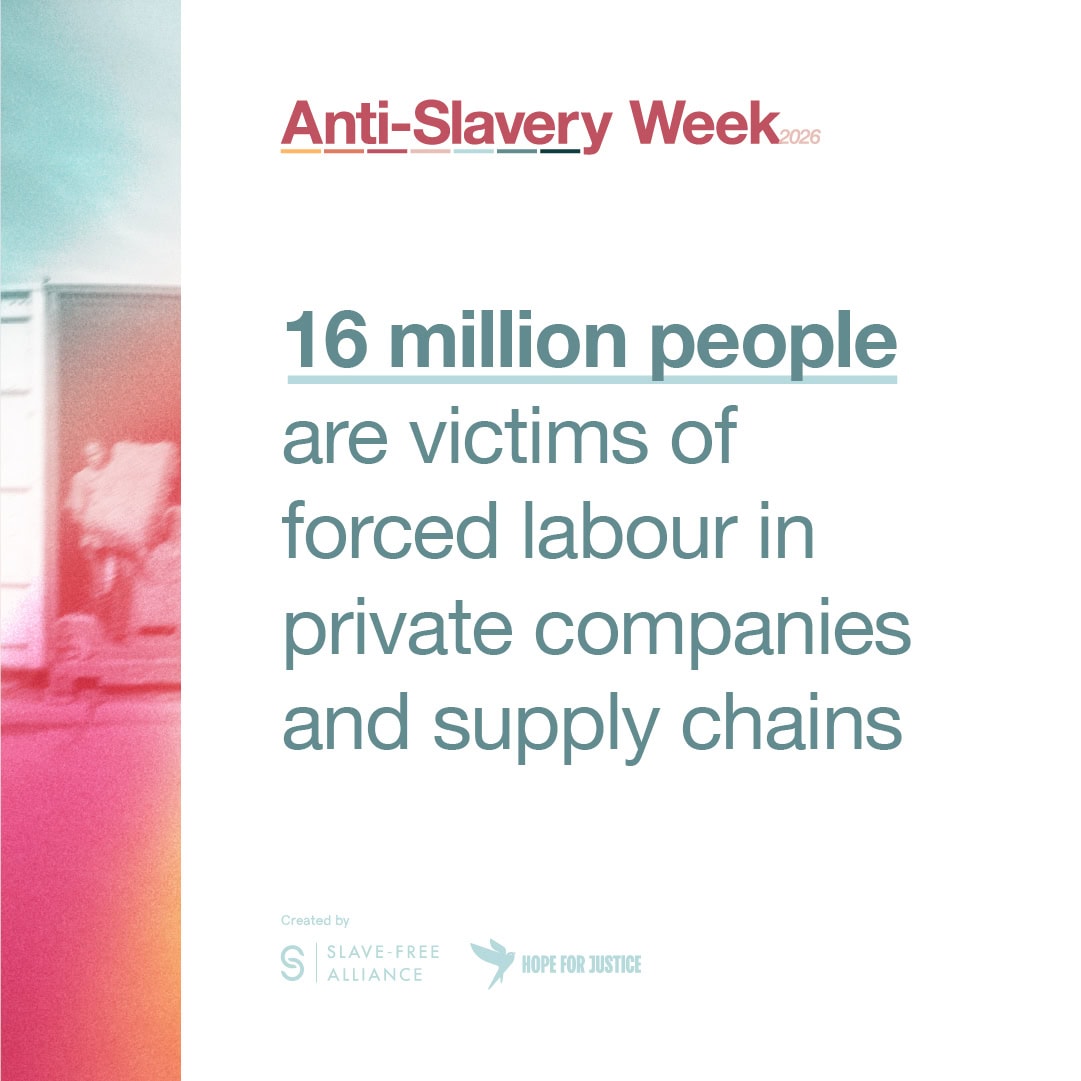
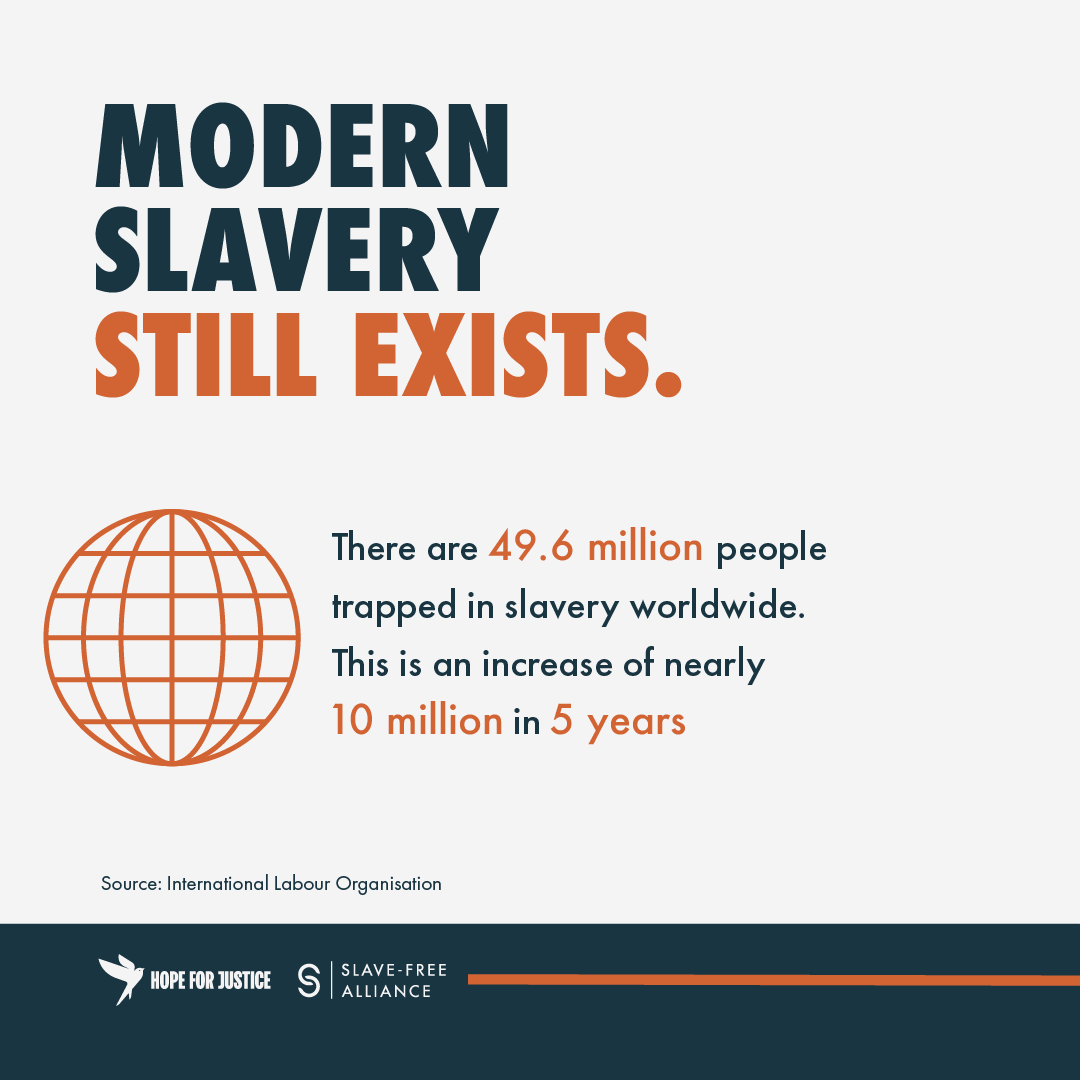
To accompany Social post 1: There are 16 million people trapped in forced labour in the private sector. Millions more are in state-imposed forced labour, domestic servitude, sex trafficking and other types of exploitation, totalling 49.6 million people in all forms of modern slavery. (Source: Global Estimates of Modern Slavery, ILO/Walk Free)
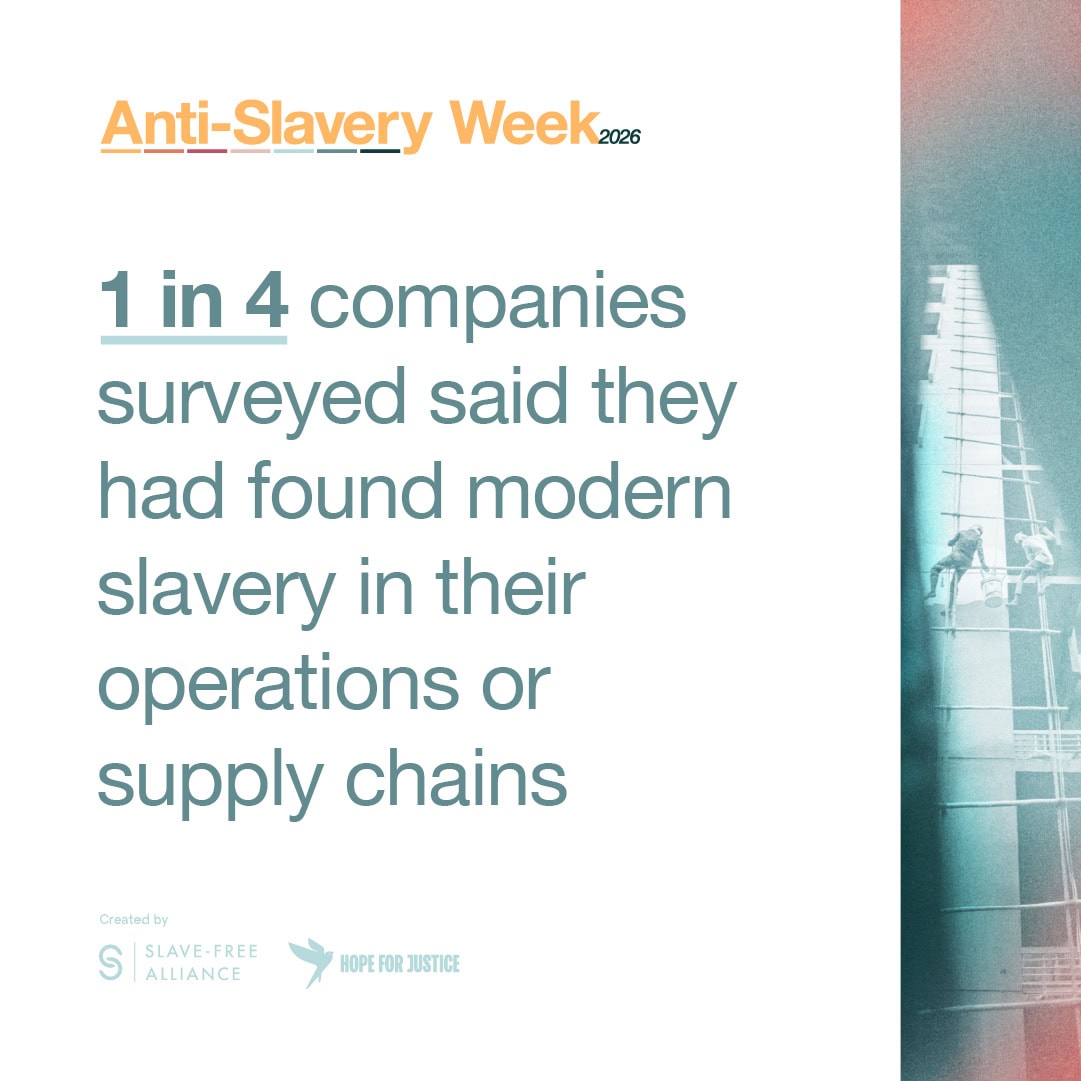
To accompany Social post 2: The CCLA Modern Slavery Global Benchmark assesses the modern slavery related disclosures of the largest globally listed companies. In the most recent 2025 research, a quarter of companies (27 out of 111) disclosed that they had found modern slavery in their operations or supply chains. This level of transparency should be recognised and encouraged as there is strong evidence that it leads to policy and practice improvements at the businesses concerned and across industry sectors.
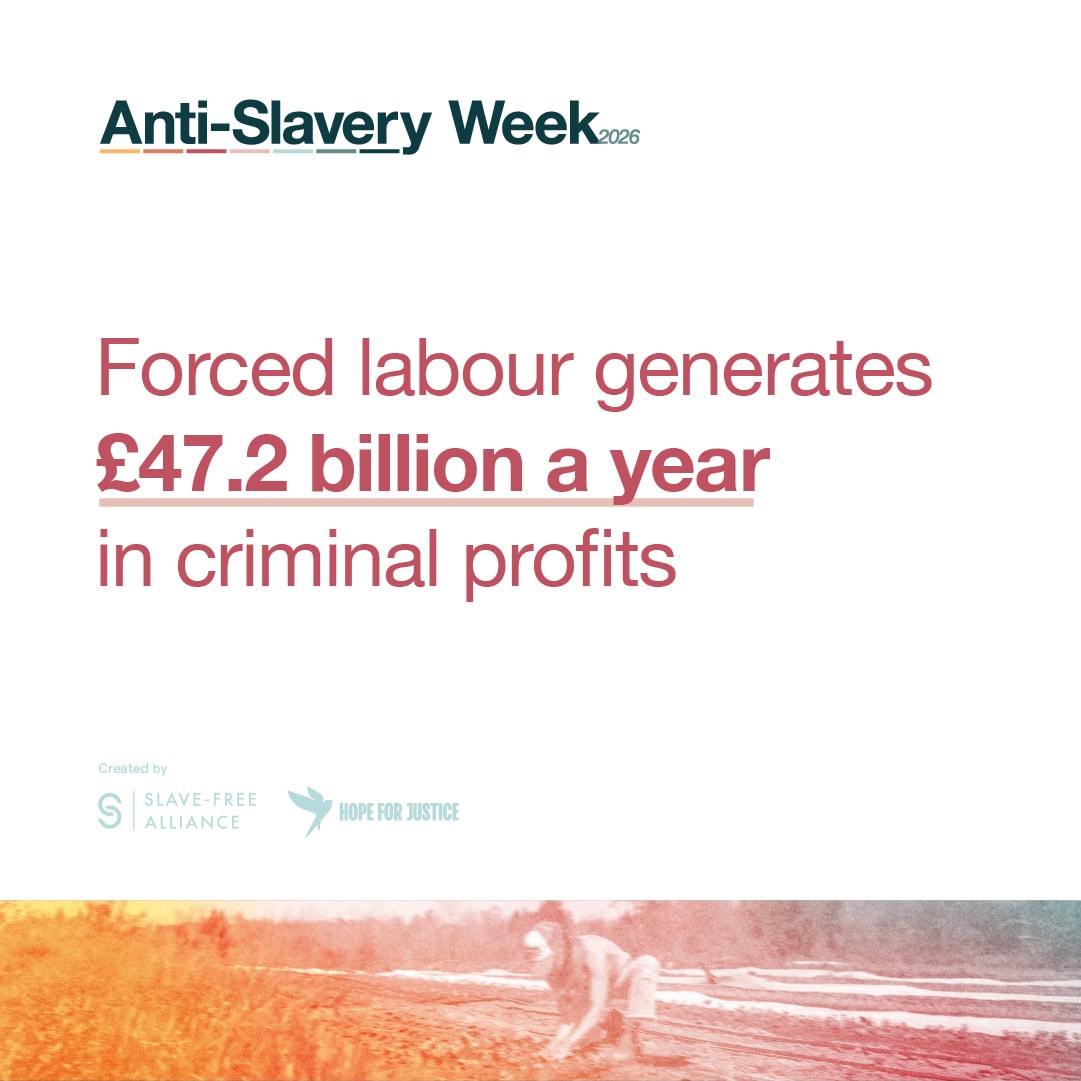
To accompany Social post 3: £47.2 billion is generated each year by criminals from forced labour exploitation, excluding commercial sexual exploitation. Each individual victim of forced labour generates an average of £2,724 per year for those controlling them. (Source: International Labour Organization, ‘Profits and poverty: The economics of forced labour’, 2024)
You can download all of these social graphics in one place via this ZIP folder (7 MB):
Additional social media graphics: definitions and explainers
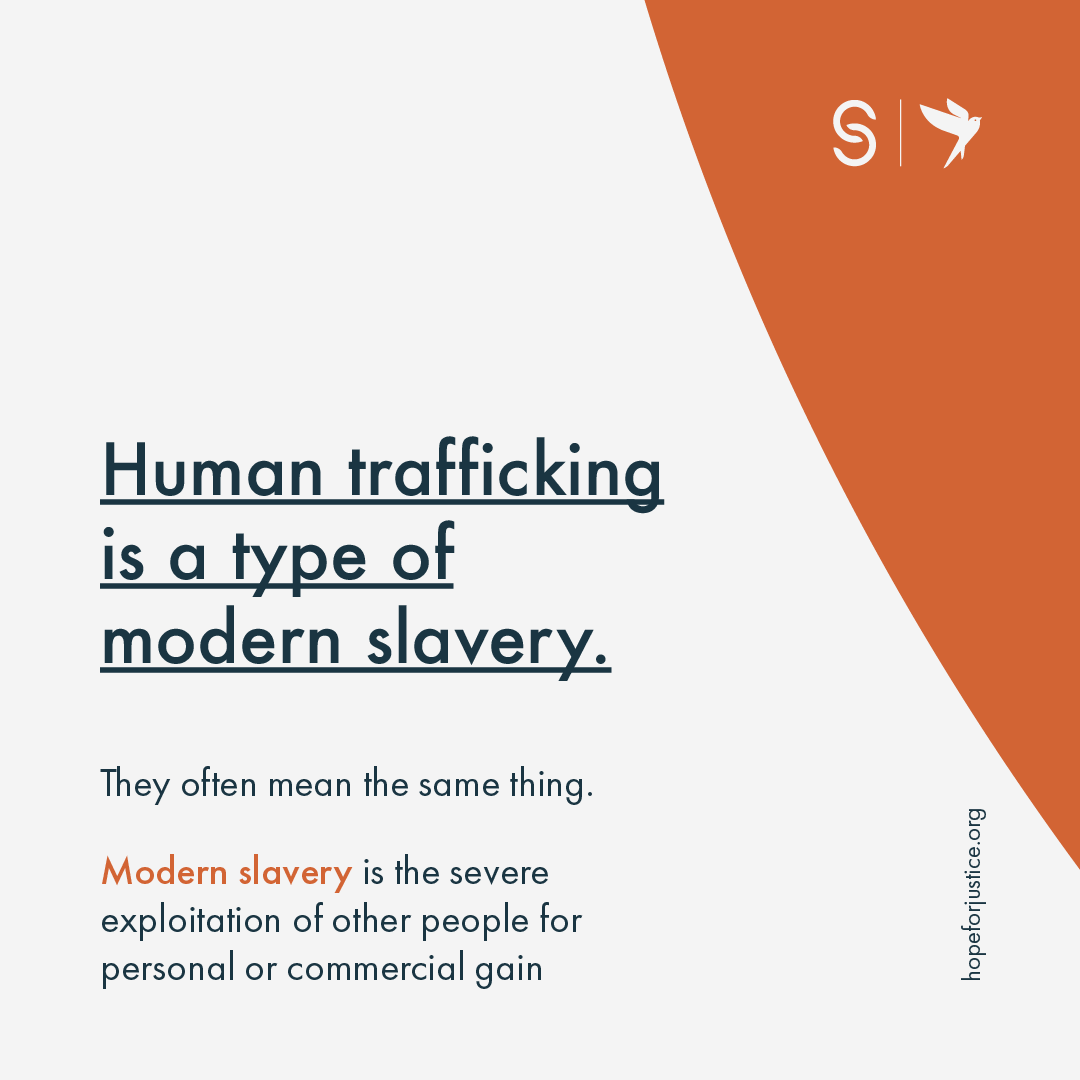
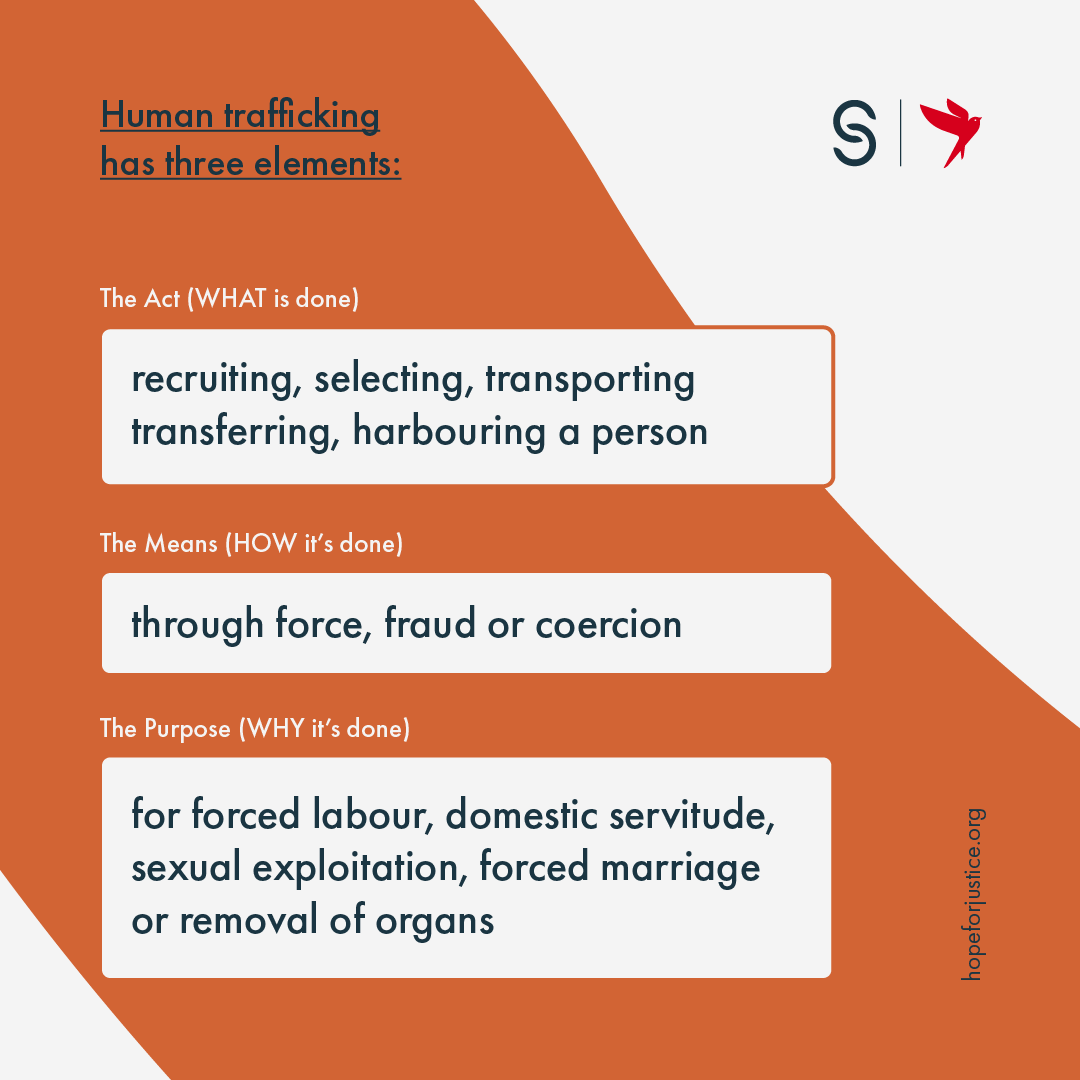
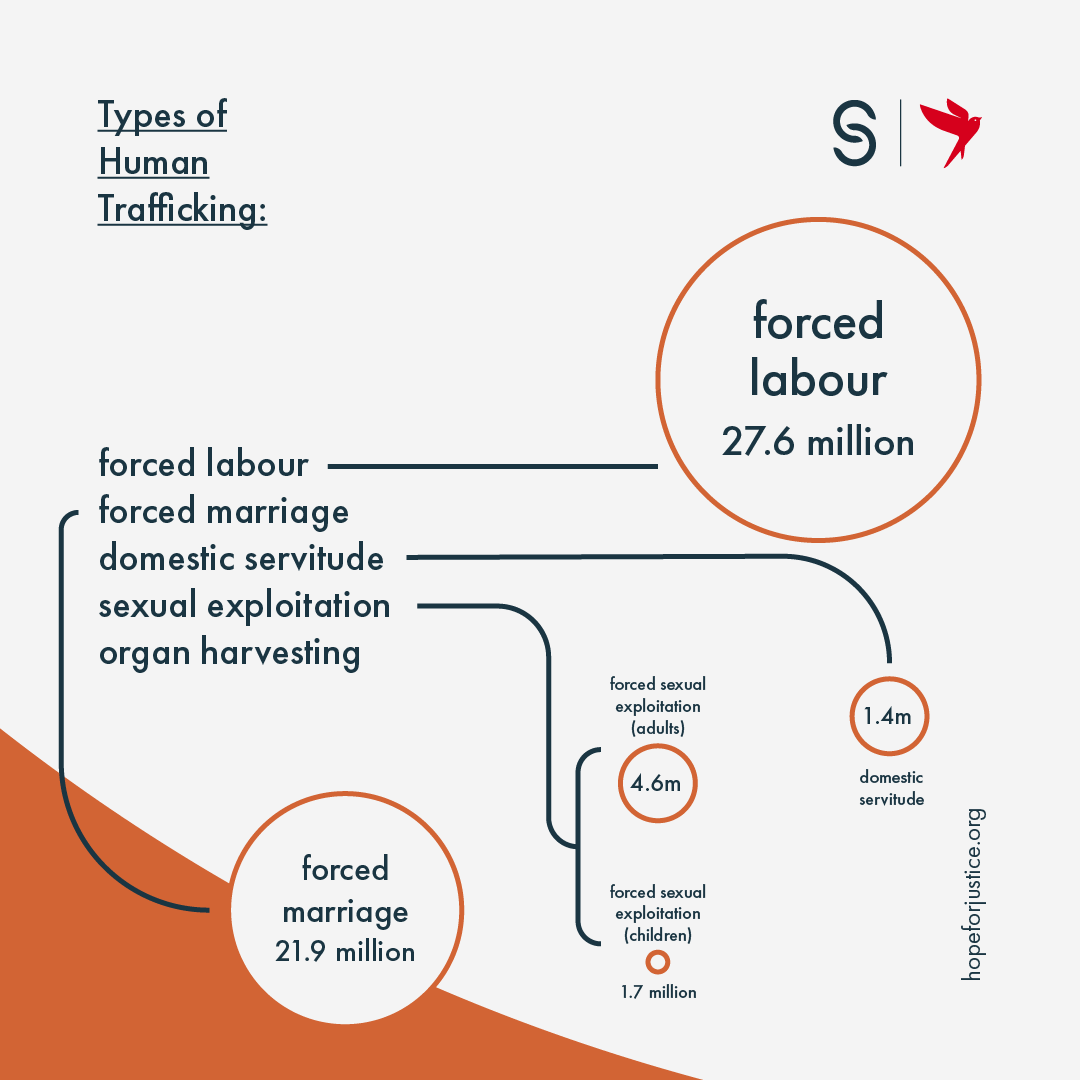
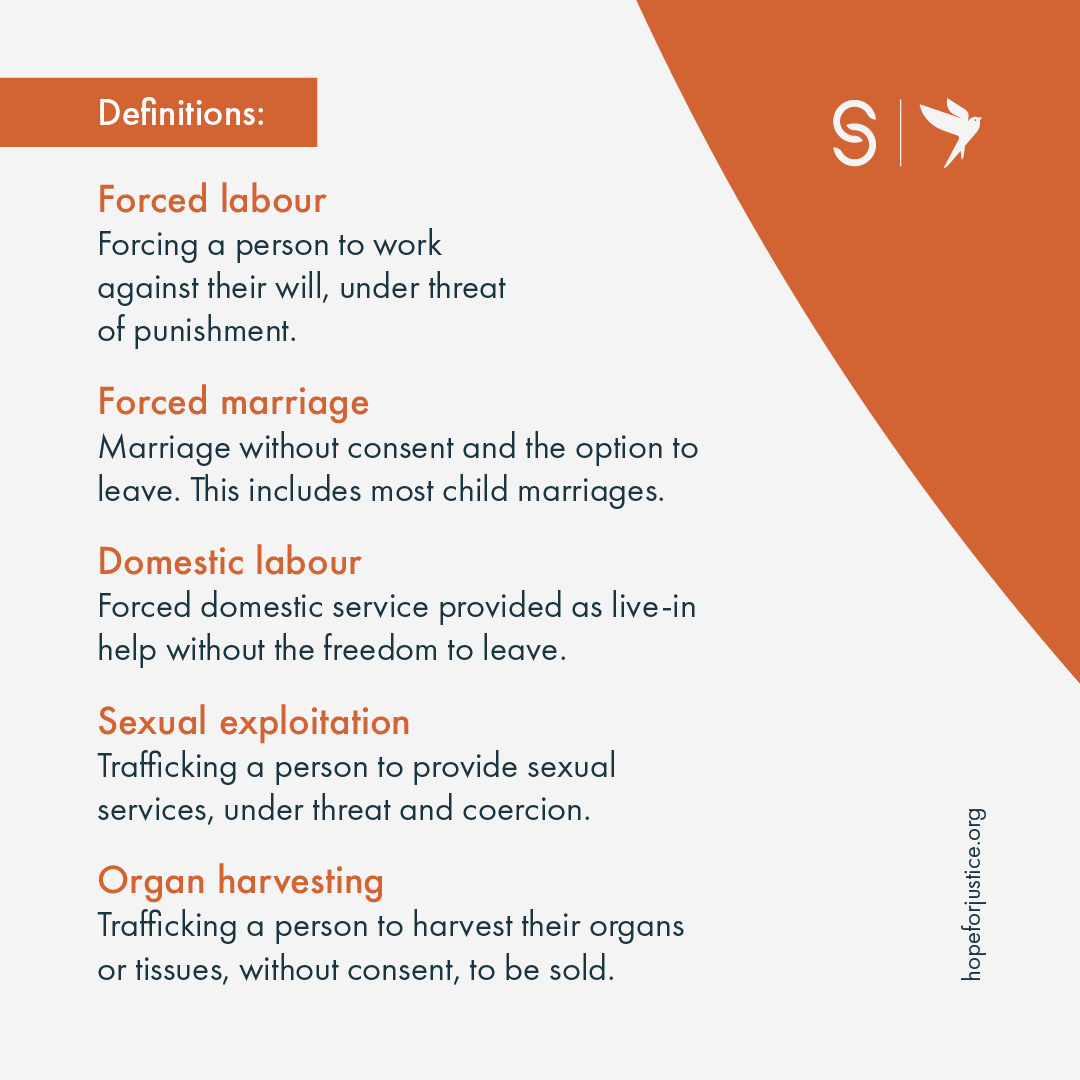
These graphics could help your audience understand the often-complex terminology around modern slavery and human trafficking, the legal definitions and the range of categorised exploitation types.
Just Transition graphics for Sustainability, CSR or ESG professionals
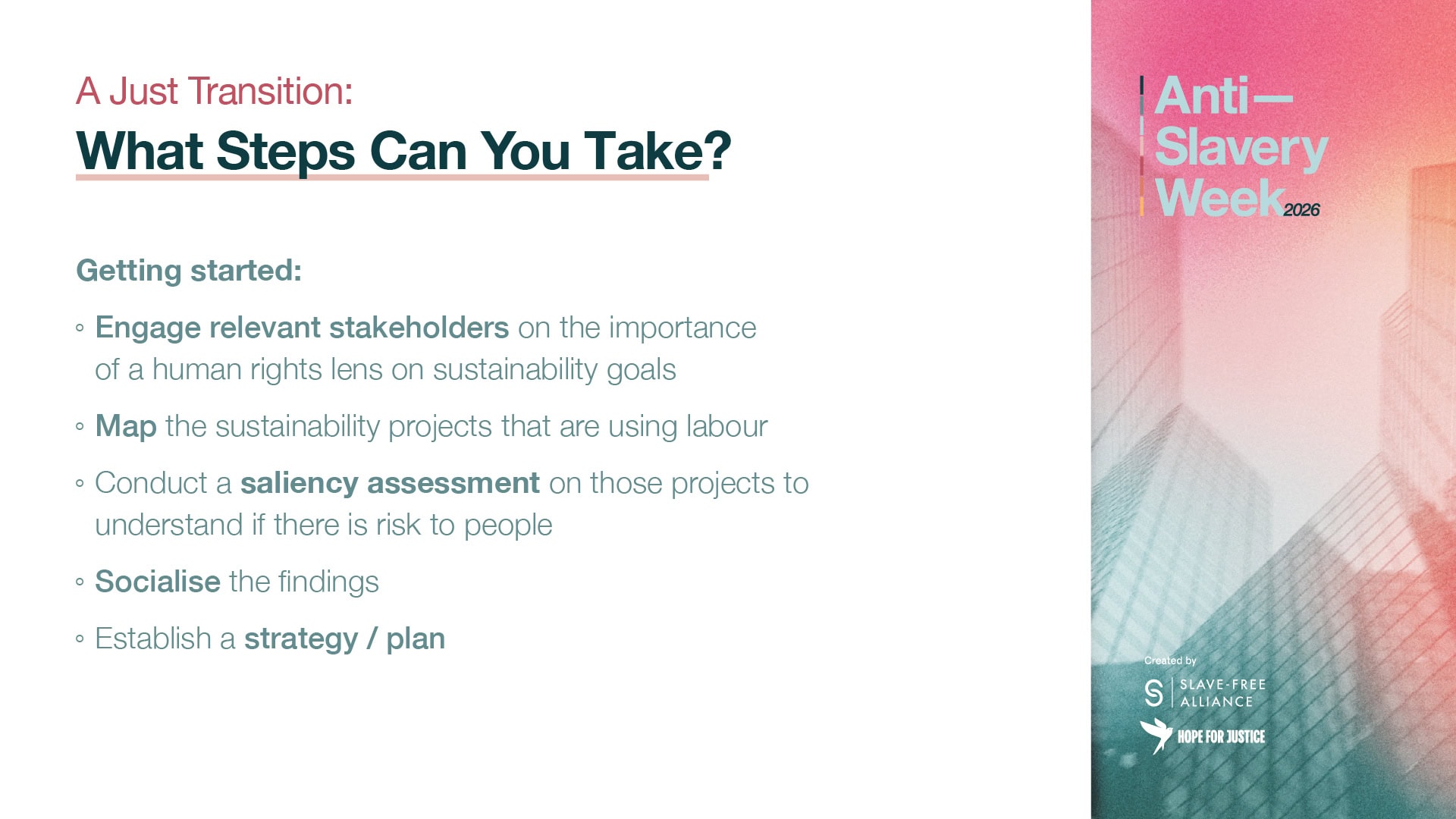
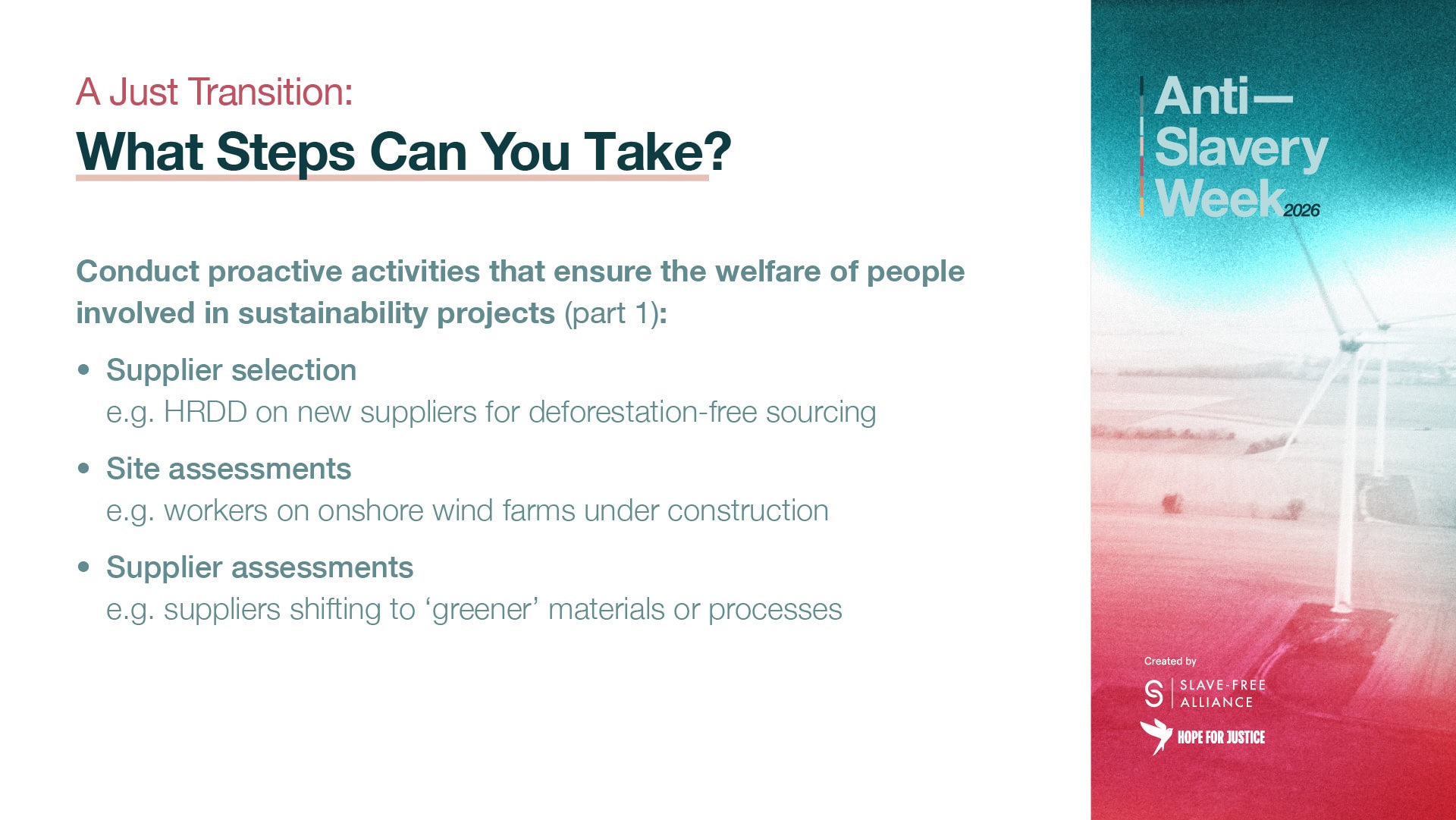
‘Just Transition’ means building a greener future without leaving people behind. It’s about ending exploitation, protecting workers’ rights, and ensuring the shift to sustainable systems is fair, inclusive, and free from modern slavery. These graphics will get your audience and stakeholders talking and thinking about the issue of just transition. They also
provide practical steps that you can take in your organisation now. SFA can support you to understand your risks, prioritise activity and engage key stakeholders, internal and external.
Or download the whole set of graphics (7 MB):